


Let's take care of our water.
Water is part of our daily lives. We use it every day, often without considering how much depends on how we use it.
Simple daily habits help save water, protect the sewer system, and care for the environment.
Saving water doesn’t have to mean making major changes. Sometimes, all it takes is turning off the tap, fixing a leaking toilet, or disposing of waste properly.
Watch the video to learn simple rules that help you better protect our water and the sewer system.
Good water is our shared responsibility.
Listen or read
If you prefer to read the material or want to revisit its content, you will find the full video transcript below.
Expand transcript
[00:00 – 00:29] I remember the day the first pipe went into the ground in Borek Stary. Back then, it was just the beginning. Today, it is a fully operational network. 65 homes in Kielnarowa connected to the sanitary sewer system. 182 people leaving septic tanks behind. 3,800 meters of new water mains in Kielnarowa and Borek Stary-Pustki.
[00:29 – 00:47] Nine new sewer connections in the area of Ogrodowa Street in Tyczyn, and over 3,500 new users in Pustomyty. These numbers mean better health. Clean water means fewer illnesses and safety for children and seniors.
[00:47 – 01:06] It means a better everyday life. Keeping it that way takes very little: turning off the tap while brushing your teeth, fixing a leaking toilet, choosing a shower over a bath, and throwing grease, wipes, and cotton swabs in the trash—not down the drain.
[01:06 – 01:19] Respecting what we have. Because this infrastructure works for all of us. We accomplished this together with Pustomyty, thanks to the Interreg NEXT Poland-Ukraine program.
Let's save water – every drop counts.
Water is one of the most important resources we use every day. It is therefore worth using it consciously and avoiding waste when it is not needed. What can you do?

Turn off the tap while brushing your teeth or soaping up your hands.

Choose a shower instead of a bath if you want to reduce water consumption.

Do not leave the tap running when you are not using the water.

Use water wisely and be mindful of unnecessary consumption.
Take care of your system
A properly functioning system means less wasted water.
We don’t always realize how much water can be lost through a small leak.
It is worth regularly checking your taps, toilet cisterns, and plumbing system. A dripping tap or a leaking cistern can lead to unnecessary water waste.
Notice a leak? Don’t put off the repair. It’s a simple way to reduce water loss and take care of your plumbing.
Let's take care of the sewer system.
Not everything that disappears down the pipe vanishes without a trace.
The sewage system is designed for the disposal of wastewater, not for the disposal of solid waste. Items such as wet wipes, cotton swabs, grease, and other waste that can clog pipes and disrupt the system’s operation should not be flushed down the toilet or poured down the sink.
- Remember:
- Waste → into the bin
- Wastewater → to the sewer system
By using the network properly, we can collectively reduce the risk of blockages and failures, as well as better protect the environment.
What should you do during a water supply interruption?
Prepare in advance
Residents are notified in advance of scheduled water supply interruptions. It is advisable to check for updates and keep a small supply of water on hand for the duration of the outage. Before the interruption, check the “News” section for announcements and fill a pitcher or bottles with water. Once the supply is restored, turn on the tap and let the water run for a moment until it flows completely clear.
Water is our shared concern – want to know more?
Explore other educational materials created as part of the “Dobra Woda Tyczyn – Pustomyty” project. Learn how water supply and sewage networks operate, the journey water takes before reaching our homes, and what happens to wastewater after use. If you would like to view the subject of water from a different perspective, take a look at the material designed for the youngest audience. “Water Through a Child’s Eyes” explains – in a simple and accessible way – why it is important to conserve water and use the sewage system correctly.

How does the water supply and sewerage network work?
What happens to water before it reaches your tap? Follow the water’s journey—from the intake, through the treatment plant and distribution network, all the way to the sewer system and wastewater treatment plant. Discover how the infrastructure we use every day works.
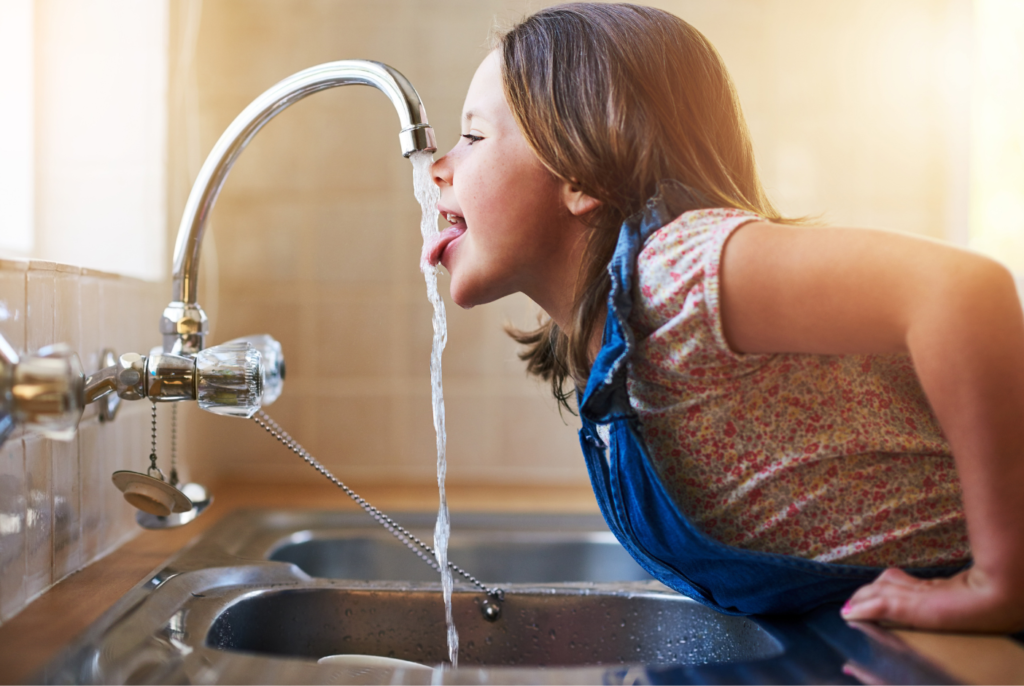
Water through a child's eyes
Water is part of our everyday lives, so it is worth learning how to care for it from a young age. Discover where water comes from, why we shouldn’t waste it, and what shouldn’t be thrown down the drain—all told from a child’s perspective.